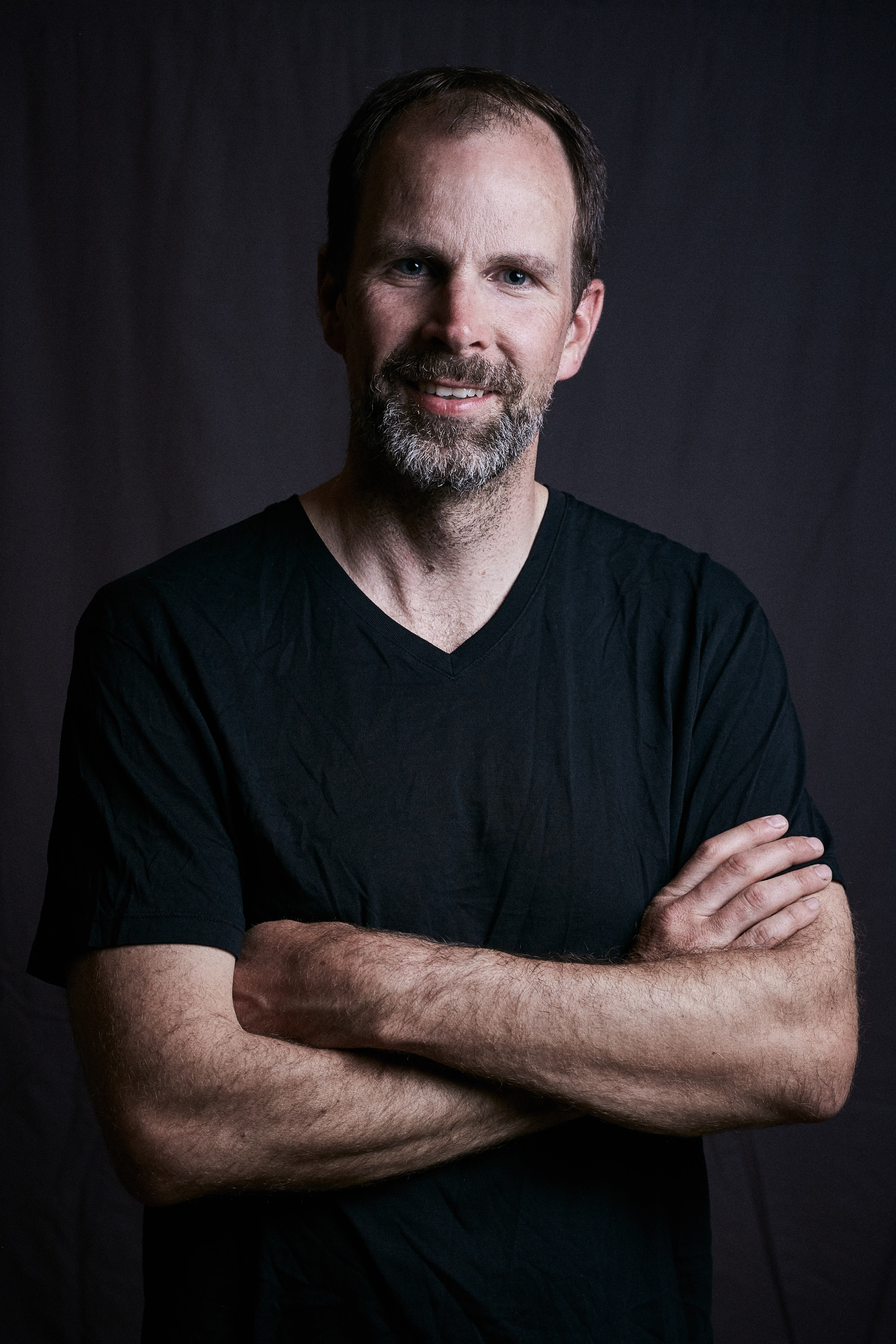
About Duncan

Duncan is an integrative biologist interested in the evolution and ecology of animal performance. Animal performance traits have fascinated humans for generations, but there is still a great deal we don't know about why and how animals can perform their amazing feats, such as jumping, running, and biting. Why can some animals run so fast? How do lizards climb walls? Why are some animals so much stronger than humans? Whereas most research on animal performance has focused on the mechanistic underpinnings of performance (the "how"), Duncan's research explicitly examines performance traits in an evolutionary and ecological context. In this way, he examines not just the "how" of animal performance, but also the "why".

Duncan was born and raised in the Bay Area in California where he attended Berkeley High School, and cut his biological teeth by volunteering at the Museum of Vertebrate Zoology at the University of California at Berkeley (where, incidentally, he first met and got to know his primary thesis advisor, Jonathan Losos). It was through tromping around the Berkeley Hills near his family home, and in the Sierra Nevada Mountains, that Duncan first acquired a love of nature (and reptiles in particular), a passion that continues to guide him in his research. Duncan then went on to graduate with a B.S. in Zoology from the University of California at Davis in 1991, where he worked with Brad Shaffer on morphological geographic variation in tiger salamanders (Ambystoma). It was also during this time when Duncan, along with collaborators, first measured the remarkable adhesive forces of gecko toepads using a force plate designed to measure small forces. The remarkable adhesive forces measured by Duncan in Tokay geckos (20 Newtons, or about a bag of 20 apples) opened people's eyes to the potential for the bio-synthesis of gecko toepad hairs (called setae). Further, while at the University of California at Davis, Duncan was accidentally re-united with Jonathan Losos, and Duncan became Jonathan's first graduate student at Washington University in St. Louis. Despite being defeated in several one-on-one Basketball games, Jonathan Losos was generous and level-headed enough to allow Duncan to come aboard.

As a graduate student at Washington University in St. Louis, Duncan attempted an ambitious project to understand how animals perform in nature; in the early 1990's, video technology was just emerging as a viable option for capturing rapid animal motion in the field. Duncan examined a group of arboreal Caribbean Anolis lizards to understand both how fast they ran in nature, and how they altered their performance abilities during different behavioral tasks (e.g., feeding). This research involved many hours of tracking and filming individual lizards through the dense forests of Puerto Rico, Jamaica, and the Bahamas, and quantifying individual movements using hand-held video cameras. This research ushered in a new era of examining animal performance in natural settings. After completing this laborious research, Duncan also vowed never to do it again, but has encouraged his students to do so, in part because he enjoys watching others work.

After completing his Ph.D. in 1997, Duncan began a postdoc in the laboratory of Bruce Jayne, where he expanded his range of techniques to include analysis of motion (kinematics) to understand animal locomotion. He also completed a short (1-year) postdoc in the laboratory of Robert J. Full where he learned the use of kinetic force-plate technology to understand dynamic movements in animals. In 2001, he assumed a tenure-track faculty position at Tulane University in New Orleans, and was awarded early tenure in 2005. However, after hurricane Katrina, Duncan realized that it might be wise to move his family to a location with fewer hurricanes, so he accepted a position at the University of Massachusetts at Amherst, where he has been since 2006.

Building on his diverse background, Duncan is committed to generating a broader synthesis between ecology, evolution, and biomechanics to understand the mysteries of animal performance. One of his most recent interests is the linkage between sexual selection and animal performance. Biologists are increasingly aware that sexual signals (e.g., peacock feathers, lizard throatfans) are intimately tied to animal performance because these traits enable males to fight rivals and therefore increase fitness. This fresh perspective on sexual traits may be a key tool for unlocking the mysteries of why sexual signals have evolved in the first place. Duncan has been fortunate to have his research widely featured in books, newspapers, the Internet media and on television. Duncan lives with his wife and son in Amherst, MA.

Some random quotes attributed to Duncan Irschick:

"Life is just a side-project" (Muttered in the dreary days of gathering DNA sequences as a graduate student at Washington University of St. Louis; this quote would soon spread like wildfire through the department, and linger in the halls for many years, bringing a sense of solace to overworked students)

"I hate weekends" (attributed to Duncan as an undergraduate when asked about the possibility of working on weekends; needless to say, this endeared him to his future boss)