Back To the PB Home Page


Faculty Research Areas


Back To the PB Home Page

Cell Biology and Physiology
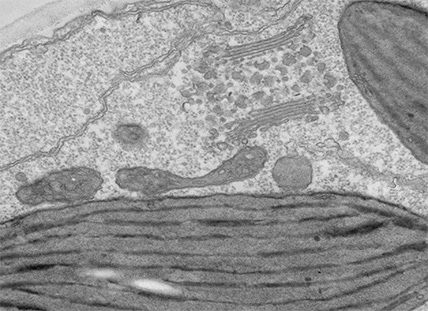
The research interests of our faculty encompass a broad range of subjects within cell biology and physiology. Broadly defined, the research in this group focuses on understanding how proteins and sets of proteins are assembled and integrated to produce function at the cellular, tissue, and whole organism level. The focus is on fundamental research in plant cytoskeleton, cell wall, signal transduction, the assembly and disassembly of macromolecular complexes, and the function of transporters. Our faculty use a variety of techniques to explore these essential processes in both model organisms and agronomically important species. Cellular imaging is a particular strength of the program*.

Tobias Baskin - Regulation of plant cell and organ expansion
Magdalena Bezanilla - The role of the actin cytoskeleton in the morphogenesis and development of plant cells
Maura Cannon -
Plant growth and development as influenced by cell wall assembly
Alice Cheung - Biochemistry and molecular analysis of sexual reproduction
Susan Han - Physiology of flowering and postharvest care of floricultural crops
Peter Hepler (Emeritus) -Cell division and pollen tube growth; the role of calcium and the cytoskeleton
Danny Schnell - Intracellular protein targeting and chloroplast biogenesis
Carolyn Wetzel, Smith College - Plant chloroplast development and function; plant cell development; plant physiology
Lawrence J. Winship, Hampshire College - regulation of cell wall expansion during oscillatory growth in lily pollen tubes
Christopher Woodcock (Emeritus) - Nuclear structure/function, chromatin architecture and dynamics

*Our microscopy facility offers access to microscopes and/or microscopy services to the entire research community. Please see the home page of the UMass Central Microscopy Facility for more information.

Biochemistry and Metabolism
The research interests of Plant Biology faculty encompass many aspects of plant biochemistry.  With an increasing number of sequenced genomes, come increased opportunities to come to a fundamental understanding of protein function, and to manipulate gene function to produce desirable compounds.  Approaches used by faculty in this area include profiling of gene expression (transcriptomics), protein expression (proteomics), and metabolites (metabolomics); metabolic engineering, and investigation of assembly of protein “machines”.

Allen Barker - Plant nutrition, stress ethylene, compost utilization
J. Marshall Clark – Pesticide and environmental toxicology
Lyle Craker - Physiology and biochemistry of oils and essences in herbs
Jennifer Normanly - Auxin biosynthesis and high throughput metabolic profiling
Om Parkash - Phytoremediation of heavy metals by genetically engineered plants 
Susan Roberts - Optimization of secondary metabolite accumulation in cell cultures
Danny Schnell - Intracellular protein targeting and chloroplast biogenesis
Kalidas Shetty - Plant and environmental biotechnology, plant secondary metabolism, tissue culture  
Elsbeth Walker - Molecular genetics of taxol synthesis in plant cell cultures

Genetics and Evolution
Plant Biology faculty engage in the study of genetics and evolution at many levels, from the study of individual genes and gene function, to whole genome evolution, to the evolution of plant form and function.  Faculty in this area have special interests in gene discovery using mutational analysis, genome evolution and population genetics, and the evolution of form and function in the plant kingdom.

Robert Bernatzky
- Molecular markers for plant genome analyses
Amy Frary
, Mount Holyoke College – Basic and applied aspects of plant genome analysis
Michael Marcotrigiano
, Smith College - Plant development, micropropagation and breeding systems
Ana Caicedo - Plant molecular evolution and evolutionary genomics
Geunhwa Jung - Comparative genome analysis and genetic mapping of quantitative trait loci for disease resistance in turfgrass and cereals
Jill Miller, Amherst College - Ecology and evolution of plant sexual systems, floral evolution, incompatibility systems, phenotypic plasticity
Benjamin Normark - Evolution of alternative genetic systems in insects
Elsbeth Walker - Genetics of metal ion allocation in plants

James Walker - Evolutionary biology, plant systematics, and palynology

Environmental, Ecological and Integrative
This focus area deals with the organismal to community levels of plant biology and bridges basic and applied research.  The PB faculty in this focus area have special interests in plant-insect interactions, invasive plant species, clonal plants, desiccation tolerance, coastal vegetation, air pollution biology, urban environment and plant growth, plant diseases, forest ecology, reproductive biology, local floristics, and conservation.  Research systems include active and abandoned agricultural fields, coastal grassland, and managed and natural deciduous forests, heathlands, and bogs.

Lynn Adler -Ecology and evolution of plant-insect interactions
Peter Alpert - Ecology of plant invasion, resource capture and utilization by clonal plants
Frank Caruso - Biological, chemical and cultural control of cranberry diseases
Daniel Cooley - Ecology of plant diseases, integrated pest management, sustainable agriculture
Michelle DaCosta - Plant responses to environmental stresses, with emphasis on drought and temperature stresses of grasses.
Aaron Ellison - Community ecology
Geunhwa Jung - Population genetics of plant pathogenic "sterile" fungi (do not produce any known spores, either sexual or asexual)
Robin Harrington – Forest ecology: canopy processes and regeneration of native and invasive species
Matthew Kelty – Forest ecology, management and silviculture
Guy Lanza - Bioremediation/restoration of damaged ecosystems using phytoremediation
Frank Mangan – Vegetable production with an emphasis on soil fertility and ethnic crops
William Manning - Plant response to air pollutants with emphasis on plant/microbe interactions, bioindicators, biomarkers 
Jill Miller, Amherst College - Ecology and evolution of plant sexual systems, floral evolution, incompatibility systems, phenotypic plasticity  
Karen Searcy - Herbarium curator; taxonomy and plant ecology
Robert Wick - Bacterial and fungal diseases of vegetable and greenhouse crops, nematode diseases of turf, plant disease diagnostics


About PB | Program Requirements | Admissions | Research Areas
Faculty | Students | Seminar Series | Directory | Contact Us

Plant Biology Graduate Program • 217 Morrill Science Ctr. • UMass Amherst • 611 N. Pleasant St.• Amherst, MA 01003-9297 • Ph: 413.577.3217 • Fax: 413.545.3243


© 2007 University of Massachusetts Amherst. Site Policies.
This site is maintained by S. Capistran, Plant Biology Graduate Program.
Comments to pb@bio.umass.edu